Description

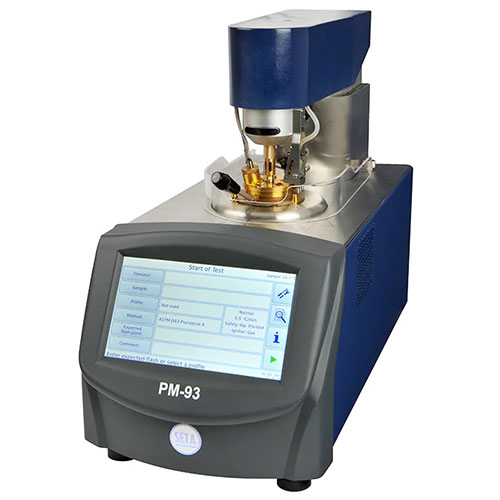
PM- 93

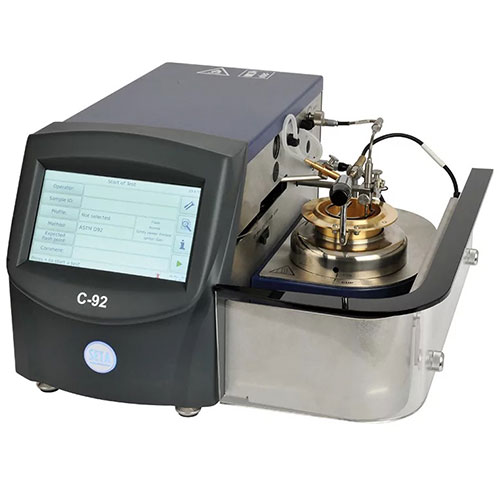
Seta C-92
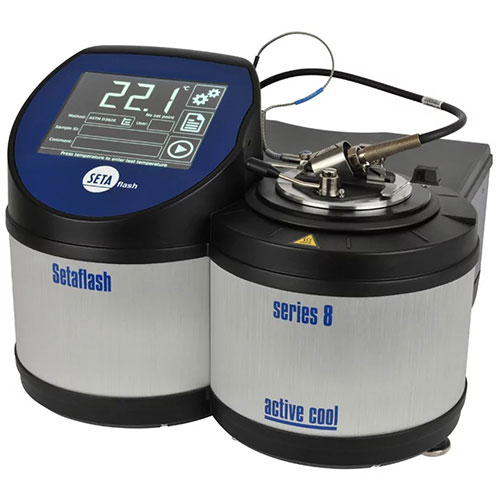
Setaflash Series 8 Active Cool
Flash Point Testing
Stanhope-Seta’s flash point testers are designed to measure the lowest temperature at which a liquid releases enough vapor to ignite in air, according to ASTM D93, ASTM D92, ASTM D56, ASTM D3828, IP 34, and ISO 2719.
Flash point testing is a critical safety measurement used across the fuel, chemical, and industrial sectors to classify flammability and determine correct storage, handling, labelling, and shipping requirements. Because flash point data feeds directly into SDS, DOT, and OSHA hazard classifications, accurate and repeatable flash point testing is essential for regulatory compliance and workplace safety worldwide.
Key Models:
- Seta PM-93 Pensky-Martens Flash Point Tester (35000-2): A fully automated closed cup flash point tester supporting ASTM D93, ASTM D8175, IP 34 and ISO 2719, delivering fast, repeatable results up to 410°C.
- Seta C-92 Automatic Open Cup Flash & Fire Point Tester (35300-0): An advanced automated open cup tester built for flexible, easy-to-use flash and fire point determination.
- Setaflash Series 8 ActiveCool Flash Point Tester (82100-2): A compact small-scale closed cup tester that delivers rapid, safe flash point results using minimal sample volume.

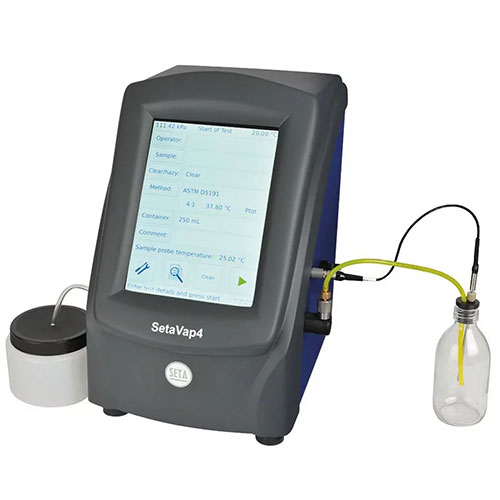
SetaVap 4 80600-2

Crude Oil Manual Poston
Vapor Pressure Testing
How readily a fuel evaporates can make or break its performance — and Stanhope-Seta’s range of vapor pressure analyzers gives laboratories a fast, accurate way to quantify it, in line with ASTM D323, ASTM D6377, ASTM D5191, ASTM D6378, ASTM D8009, IP 394, IP 481, IP 619, and EN 13016. For automotive and aviation gasolines, vapor pressure directly affects engine starting, warm-up behavior, and the risk of vapor lock at high temperatures or altitude. Crude oil producers and refiners also rely on vapor pressure data to handle and transport crude safely, identifying the conditions under which volatile components can build pressure and threaten pipelines or storage vessels.
Key Models:
- SetaVap4 Automatic Vapour Pressure Analyser (80600-2): A fully automated vapour pressure analyser supporting a wide range of ASTM, EN, and IP test methods for fuels and crude oil.
- SetaVap4 with Digital Density (80607-2): The newest addition to the SetaVap4 range, pairing automated vapor pressure measurement with integrated digital density analysis.
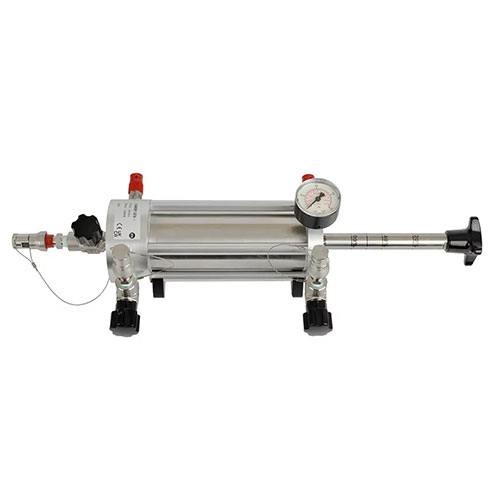
- Crude Oil Manual Piston Cylinder (80615-0): Enables the safe sampling and transport of crude oil in full compliance with ASTM D6377 and ASTM D8009, preserving volatile light ends for accurate testing.

Cetane Number Analyser
Cetane Number Testing
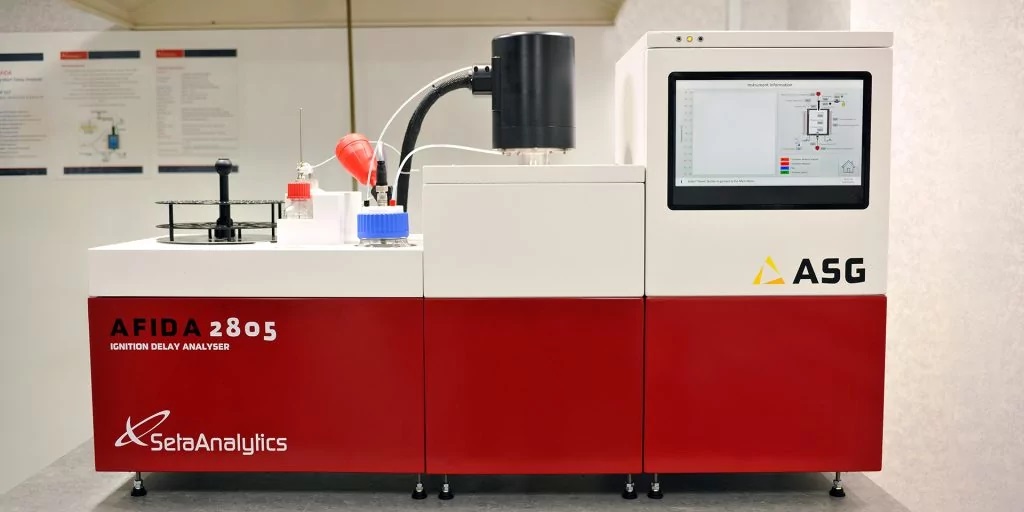
Not all diesel fuel ignites the same way — cetane number quantifies exactly how well a fuel performs under compression, and Stanhope-Seta’s cetane analyzers deliver that measurement to ASTM D613, ASTM D6890, ASTM D7170, ASTM D8183, and EN ISO 5165. Getting this number right matters at every stage of the supply chain, from refining and blending through to final distribution, since it determines whether an engine will ignite fuel cleanly and efficiently. Reliable cetane testing translates directly into better fuel economy, lower emissions, and smoother engine performance, whether the fuel in question is conventional diesel, a biodiesel blend, or a synthetic alternative.
Key Model
- AFIDA – Indicated Cetane Number Analyser (SA6000-0): A fully automated instrument that rapidly determines the Indicated Cetane Number (ICN) of diesel and diesel-related fuels, without the need for an engine-based test.

Silver Copper Corrosion Bath

Copper Silver Block Bath
Corrosion Testing
Sulfur compounds naturally present in petroleum products can quietly attack copper and silver components inside engines, fuel systems, and storage tanks — which is exactly what Stanhope-Seta’s corrosion testing equipment is built to detect, following ASTM D130, ASTM D7671, ASTM D7667, IP 154, IP 227, IP 611, ISO 2160, and DIN 51811. Passing the copper or silver strip corrosion test is a baseline requirement across jet fuel, marine fuel, and lubricant specifications, giving refiners, blenders, and end users confidence that a product won’t damage the metal it touches. Left undetected, corrosive fuel can lead to costly equipment failures long before a quality issue would otherwise surface.
Corrosion Testing Instruments:
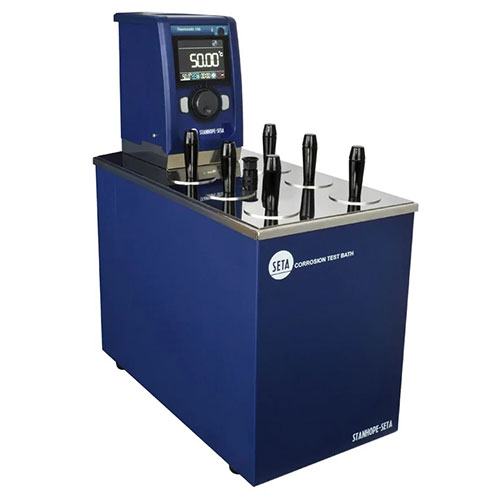
- Seta Silver and Copper Corrosion Bath (11405-0): A bench-top, stainless-steel water or oil bath purpose-built for silver and copper strip corrosion testing.
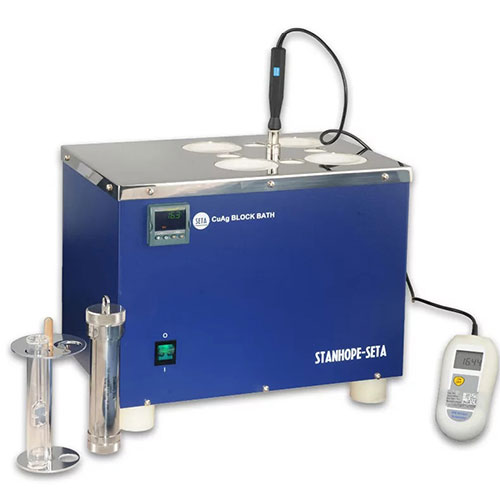
- Seta Copper Silver Block Bath (11310-0): A precision aluminium block bath delivering tight temperature stability for silver strip corrosion (ASTM D7667) and copper corrosion (ASTM D130) testing.

WSI Analyser
Water Separation Testing
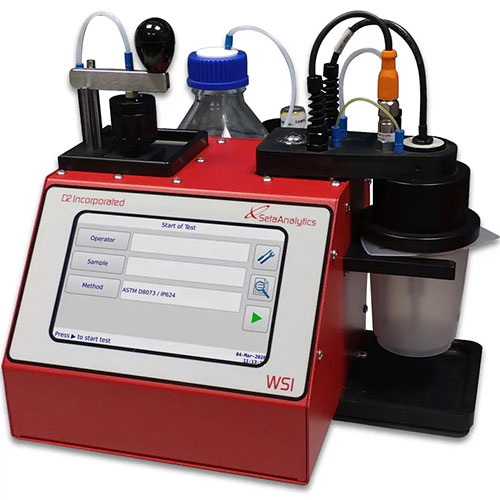
A fuel that can’t shed water cleanly is a fuel that can quietly disable an aircraft’s filtration system — which is why water separation testing, to ASTM D8073, IP 624, ASTM D3948, and ASTM D7224, is such a critical checkpoint for aviation turbine fuel. Referenced in both ASTM D1655 and Defence Standard 91-091, this test detects surfactant contamination at every stage of the fuel supply chain, from point of manufacture through to final delivery. It’s now the preferred method under JIG Bulletin 150 for fuels containing Static Dissipator Additives, reflecting how central water separation testing has become to modern fuel quality assurance.
Key Instrument:
- Water Separation Instrument – WSI Analyser (SA9000-0): A fully automatic, compact bench-top/portable instrument that measures how effectively fuel releases entrained and emulsified water through a coalescing filter, with near 100% accuracy in independent trials.

H2S ANalyser

FAME in Jet
Contaminant Testing (FAME & Hydrogen Sulphide)
Even trace-level contamination can compromise fuel safety and performance, which is why laboratories turn to Stanhope-Seta for FAME (biodiesel) and hydrogen sulphide (H2S) analysis, carried out to ASTM D7621, IP 570, ISO 8217, and ASTM D6299. Hydrogen sulphide is both toxic and corrosive, so keeping it within tightly controlled limits protects crew safety as much as equipment integrity. Under ISO 8217, the industry has set a 2 ppm limit for H2S in the liquid phase, making IP 570 Procedure A the referee test that refineries and marine fuel suppliers rely on worldwide.
Instruments:
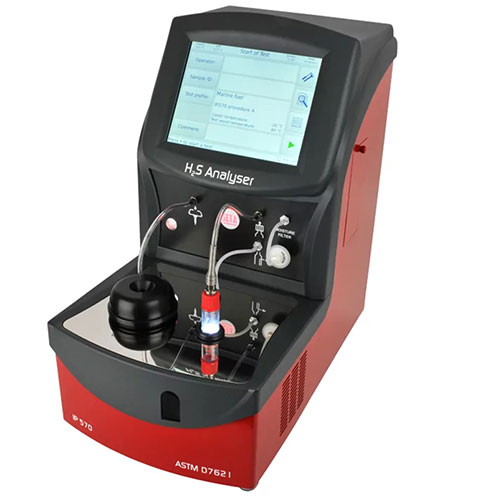
- H2S Analyser with Vapour Phase Processor (SA4000-4): A compact bench-top instrument that measures total hydrogen sulphide content, with an integrated Vapour Phase Processor to eliminate interfering compounds for accurate results.
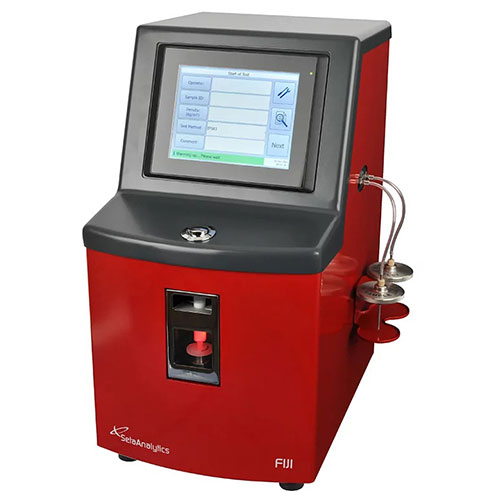
- FIJI JF – FAME in Jet Instrument (SA5000-2): Delivers a rapid, easy check on parts-per-million levels of FAME contamination in aviation fuel.

Auto Oxidation Stability Bath

Auto-Oxi-control System
Oxidation Stability Testing
Fuels and lubricants don’t stay chemically stable forever — exposure to oxygen and heat over time can trigger the formation of insoluble deposits and sludge, and that’s precisely what oxidation stability testing is designed to catch, per ASTM D2274, ASTM D943, ISO 12205, and IP 388. By simulating up to a year of storage within a single accelerated laboratory test, this method gives refiners and end users a fast, reliable way to predict whether a fuel will hold up over its intended shelf life. Catching oxidation issues early helps avoid costly downstream problems like clogged filters and degraded fuel quality.
Key Models:
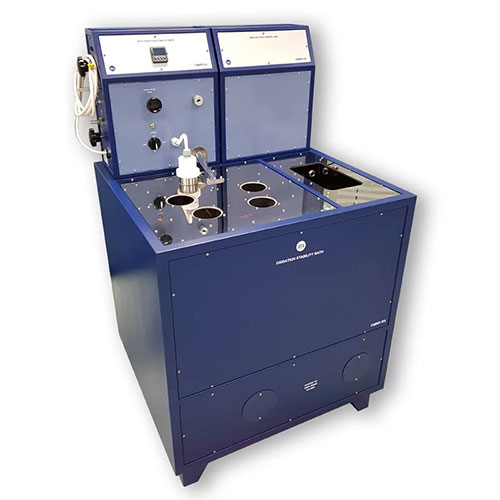
- Seta Auto-Oxidation Stability Bath (15400-5): An automated bath for running accelerated oxidation stability tests to ASTM D2274 and related standards.
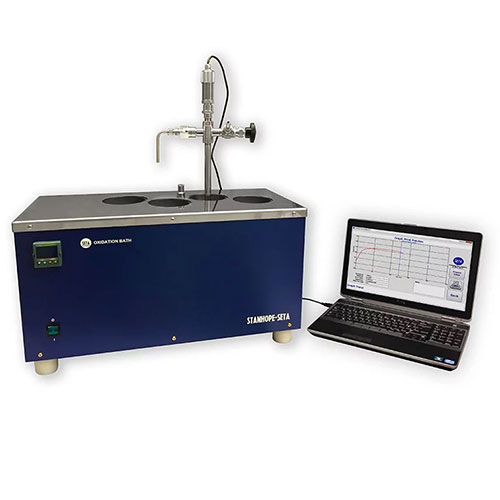
- Seta Auto-Oxi Control System (15452-2): Provides automated control of oxidation stability test conditions for consistent, repeatable laboratory results.